
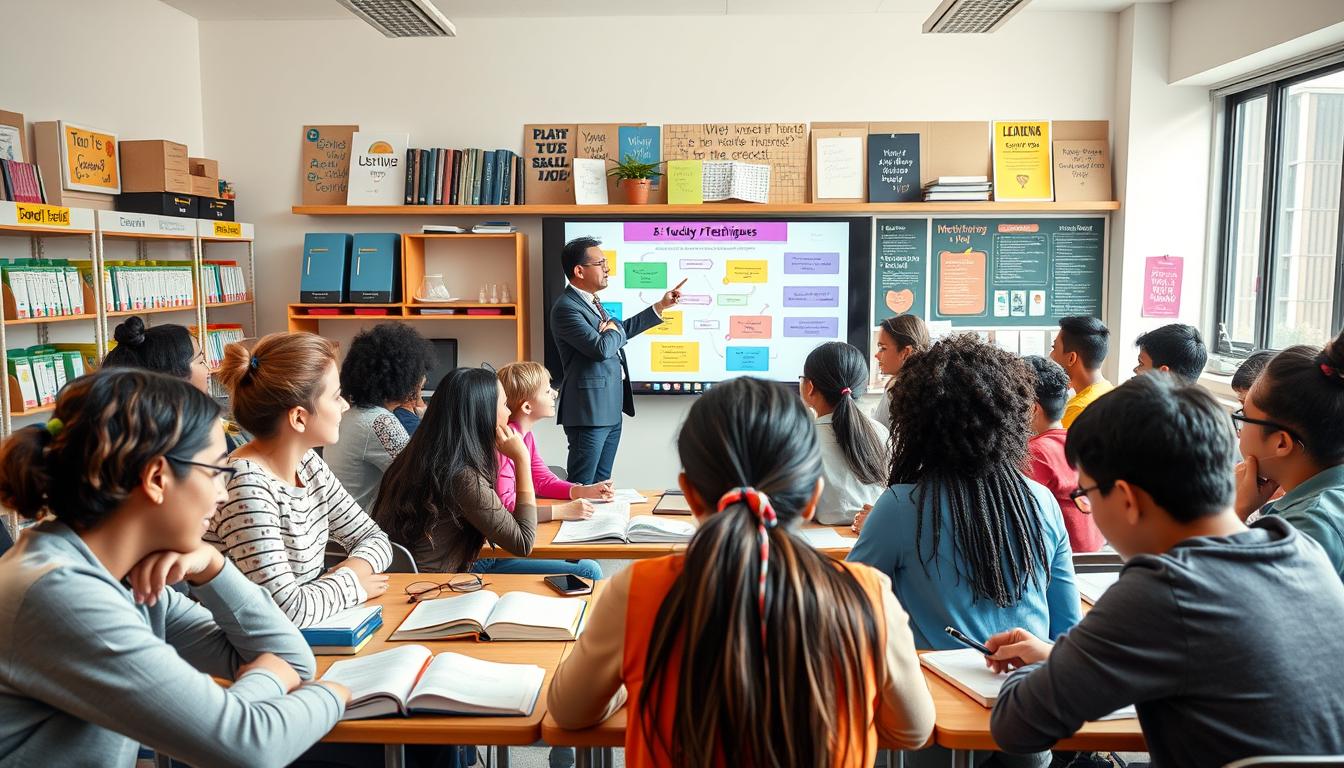
Are traditional teaching methods holding students back from reaching their full potential? In today’s fast-paced educational landscape, it’s essential to adopt effective classroom approaches that foster engagement and drive academic success.
By incorporating innovative and evidence-based methods, educators can significantly enhance student performance and create a more productive learning environment.
Key Takeaways
- Effective teaching methods can boost student performance
- Innovative approaches foster engagement and drive academic success
- Evidence-based methods enhance the learning environment
- Productive classrooms lead to better academic outcomes
- Teachers play a crucial role in shaping student success
The Science of Effective Learning in Today’s Classrooms
Effective learning in today’s classrooms is rooted in scientific research. Understanding how students process and retain information is crucial for developing effective teaching methods. Research in educational psychology has shown that students learn in various ways, and it’s the teacher’s role to facilitate this process.
How Students Process and Retain Information
Students process information through different cognitive mechanisms. Some key factors influencing this process include prior knowledge, emotional state, and the complexity of the material. Active engagement techniques, such as discussions and hands-on activities, can significantly enhance information retention.
Bridging the Gap Between Research and Practice
There’s often a gap between educational research and classroom practice. Educators can bridge this gap by staying updated on the latest research findings and incorporating evidence-based practices into their teaching.
Key Learning Principles for Educators
| Principle | Description | Application |
|---|---|---|
| Active Learning | Engaging students in the learning process | Group discussions, hands-on activities |
| Spaced Repetition | Reviewing material over time | Regular quizzes, spaced homework |
| Feedback | Providing timely, constructive feedback | Regular assessments, one-on-one feedback sessions |
By understanding and applying these principles, educators can enhance student engagement techniques and overall learning outcomes.
Implementing Active Classroom Learning Strategies
Implementing active classroom learning strategies is crucial for enhancing student engagement and understanding. These strategies involve more than just lecturing; they require students to participate actively in the learning process.

Think-Pair-Share and Jigsaw Techniques
Think-Pair-Share is a technique where students first think about a question or problem individually, then discuss it with a partner, and finally share their insights with the class. This encourages collaborative learning and helps students develop communication skills.
Step-by-Step Implementation Guide
- Pose a question or problem to the class.
- Allow students time to think about it individually.
- Have students discuss their thoughts with a partner.
- Invite pairs to share their conclusions with the class.
The Jigsaw technique involves dividing students into small groups and assigning each group a different aspect of a topic. Each group member becomes an “expert” on their assigned aspect and then teaches it to their group members.
Problem-Based Learning Approaches
Problem-Based Learning (PBL) is an educational tool that presents students with real-world problems to solve. This approach fosters critical thinking, creativity, and collaboration among students.
Collaborative Group Activities That Work
Collaborative group activities are designed to promote teamwork and mutual understanding among students. These activities can range from group projects to peer review sessions.
Structuring Effective Group Interactions
- Clearly define the task and expectations.
- Ensure each group member has a defined role.
- Monitor group progress and provide guidance as needed.
- Encourage groups to reflect on their process and outcomes.
By implementing these active learning strategies, educators can create a more engaging and effective learning environment that caters to diverse student needs.
Differentiated Instruction for Diverse Student Needs
Differentiated instruction is a crucial approach for addressing the diverse learning needs of students in modern classrooms. By tailoring instruction to meet the unique needs of each learner, educators can enhance student engagement and improve academic outcomes.
Assessing Individual Learning Styles and Preferences
To implement differentiated instruction effectively, teachers must first assess the individual learning styles and preferences of their students. This involves understanding how each student processes information and identifying their strengths and weaknesses. Student-centered learning approaches focus on meeting the diverse needs of learners.
Creating Tiered Assignments and Activities
One effective strategy for differentiated instruction is creating tiered assignments and activities. These are designed to cater to different learning levels and styles, ensuring that all students are challenged appropriately. By incorporating instructional design strategies that account for varied learning needs, educators can promote inclusivity.
Flexible Grouping Strategies for Inclusive Learning
Flexible grouping is another key component of differentiated instruction. By grouping students flexibly based on their needs and abilities, teachers can provide targeted support and challenges. This approach helps to ensure that all students are engaged and motivated.
Managing Multi-Level Instruction
Managing multi-level instruction requires careful planning and organization. Teachers must be able to deliver instruction to students at different levels simultaneously, which can be achieved through strategies like learning centers and tiered assignments. Effective classroom management is crucial for successful differentiated instruction.
Integrating Technology to Enhance Learning Outcomes
Innovative teaching approaches that incorporate technology are revolutionizing the way students learn and interact with educational content. By leveraging digital tools and blended learning models, educators can create more engaging, personalized, and effective learning experiences.
Digital Tools That Support Different Learning Objectives
Digital tools can significantly enhance learning outcomes by supporting various learning objectives. For instance, interactive whiteboards and educational software can make complex concepts more accessible and engaging. Some key digital tools include:
- Learning management systems (LMS) like Canvas and Blackboard
- Interactive simulation tools such as PhET Interactive Simulations
- Collaboration platforms like Google Classroom and Microsoft Teams
These tools not only facilitate content delivery but also promote active learning and collaboration among students.
Blended Learning Models for Modern Classrooms
Blended learning models combine traditional face-to-face instruction with online learning. This approach allows for a more flexible and personalized learning experience. A key aspect of successful blended learning is:
Balancing Online and Offline Activities
To achieve a balanced blended learning model, educators should ensure that online activities complement offline lessons. This can be done by:
- Using online resources to pre-teach concepts before classroom instruction
- Conducting online discussions to extend classroom conversations
- Providing online assessments to track student progress
Addressing Digital Equity and Access Issues
A significant challenge in integrating technology is ensuring digital equity. Not all students have equal access to devices and internet connectivity outside the classroom. To address this, schools can:
- Implement device loan programs
- Partner with internet service providers to offer affordable plans
- Develop offline-accessible digital content
By acknowledging and addressing these challenges, educators can create more inclusive learning environments.

Assessment Strategies That Drive Continuous Improvement
The effectiveness of teaching methods can be significantly enhanced by implementing assessment strategies that drive continuous improvement. These strategies are crucial for understanding student progress and adjusting instruction to meet their needs.
Formative Assessment Techniques for Daily Use
Formative assessments are ongoing, informal evaluations used by teachers to monitor student learning and adjust their instruction accordingly. These assessments can include a variety of techniques to gauge student understanding.
Exit Tickets and Quick Checks for Understanding
Exit tickets and quick checks are simple, effective tools for assessing student understanding at the end of a lesson. They provide immediate feedback to both teachers and students.
Examples include:
- Multiple-choice questions
- Short-answer questions
- Concept quizzes
Providing Actionable Feedback That Motivates
Feedback is a critical component of the learning process. It should be specific, timely, and actionable to motivate students and guide their improvement.
| Feedback Type | Description | Example |
|---|---|---|
| Specific Feedback | Clearly identifies areas for improvement | “Your calculation is incorrect; revisit the formula.” |
| Timely Feedback | Provided soon after the task is completed | Immediate feedback on a quiz |
| Actionable Feedback | Gives clear steps for improvement | “Practice the problem-solving strategy we discussed.” |
Teaching Students to Self-Assess and Reflect
Teaching students to self-assess and reflect on their learning is a powerful strategy for promoting autonomy and continuous improvement. It helps students identify their strengths and weaknesses.
By incorporating these assessment strategies into daily practice, educators can enhance their teaching methods and improve student outcomes. Effective teaching methods rely on continuous assessment and improvement.
Creating Supportive Learning Environments for Maximum Engagement
To achieve maximum engagement, it’s vital to establish a supportive and inclusive learning environment. This involves implementing various strategies that cater to the diverse needs of students.
Classroom Management Techniques That Promote Learning
Effective classroom management is the foundation of a supportive learning environment. Techniques such as establishing clear rules and consequences, using positive reinforcement, and encouraging student participation can help minimize disruptions and maximize learning time.

Building Positive Teacher-Student Relationships
Building strong, positive relationships with students is crucial for creating a supportive learning environment. Teachers can achieve this by showing genuine interest in students’ lives, being approachable, and providing individualized support.
Fostering Growth Mindset and Resilience
Fostering a growth mindset and resilience in students is essential for their academic success and overall well-being. Teachers can promote this by praising effort rather than ability, providing opportunities for students to take risks, and teaching coping strategies.
Language and Practices That Encourage Persistence
The language and practices used in the classroom can significantly impact students’ persistence and motivation. Using phrases that encourage effort and progress, such as “You’re getting closer,” can help foster a growth mindset.
| Technique | Description | Benefits |
|---|---|---|
| Positive Reinforcement | Using praise and rewards to encourage good behavior | Increases motivation, improves behavior |
| Personalized Support | Providing individualized help to students | Boosts confidence, improves understanding |
| Growth Mindset Language | Using language that encourages effort and progress | Fosters persistence, promotes resilience |
Conclusion: Putting These Strategies Into Practice
Effective instructional design strategies can significantly enhance student outcomes. By implementing the approaches discussed, educators can create a more engaging and supportive learning environment.
Integrating active learning techniques, such as think-pair-share and problem-based learning, can foster deeper understanding and retention. Additionally, leveraging technology and differentiated instruction can help meet the diverse needs of students.
By applying these instructional design strategies, educators can promote continuous improvement and maximize student engagement. The key is to remain flexible and committed to ongoing assessment and refinement.
As educators begin to implement these strategies, they can expect to see positive changes in their students’ performance and overall learning experience. By working together, we can create a more effective and inclusive education system.
FAQ
What are some effective classroom learning strategies to boost student performance?
Effective classroom learning strategies include active learning techniques, such as Think-Pair-Share, Jigsaw, and problem-based learning approaches, as well as differentiated instruction and technology integration to cater to diverse student needs.
How can educators assess individual learning styles and preferences?
Educators can assess individual learning styles and preferences by using various assessment tools and techniques, such as learning style inventories, student surveys, and formative assessments, to inform their instructional design.
What are some strategies for managing multi-level instruction?
Strategies for managing multi-level instruction include tiered assignments, flexible grouping, and learning centers, which allow educators to cater to different learning needs and abilities.
How can technology enhance learning outcomes in the classroom?
Technology can enhance learning outcomes by providing digital tools that support different learning objectives, facilitating blended learning models, and promoting online and offline activities that cater to diverse learning needs.
What are some effective assessment strategies that drive continuous improvement?
Effective assessment strategies include formative assessment techniques, such as exit tickets and quick checks for understanding, as well as providing actionable feedback and teaching students to self-assess and reflect on their learning.
How can educators create supportive learning environments that foster maximum student engagement?
Educators can create supportive learning environments by using classroom management techniques that promote learning, building positive teacher-student relationships, and fostering a growth mindset and resilience in their students.
What are some instructional design strategies that promote student-centered learning?
Instructional design strategies that promote student-centered learning include problem-based learning, project-based learning, and inquiry-based learning, which encourage students to take an active role in their learning.